The Question Five Agents Never Asked


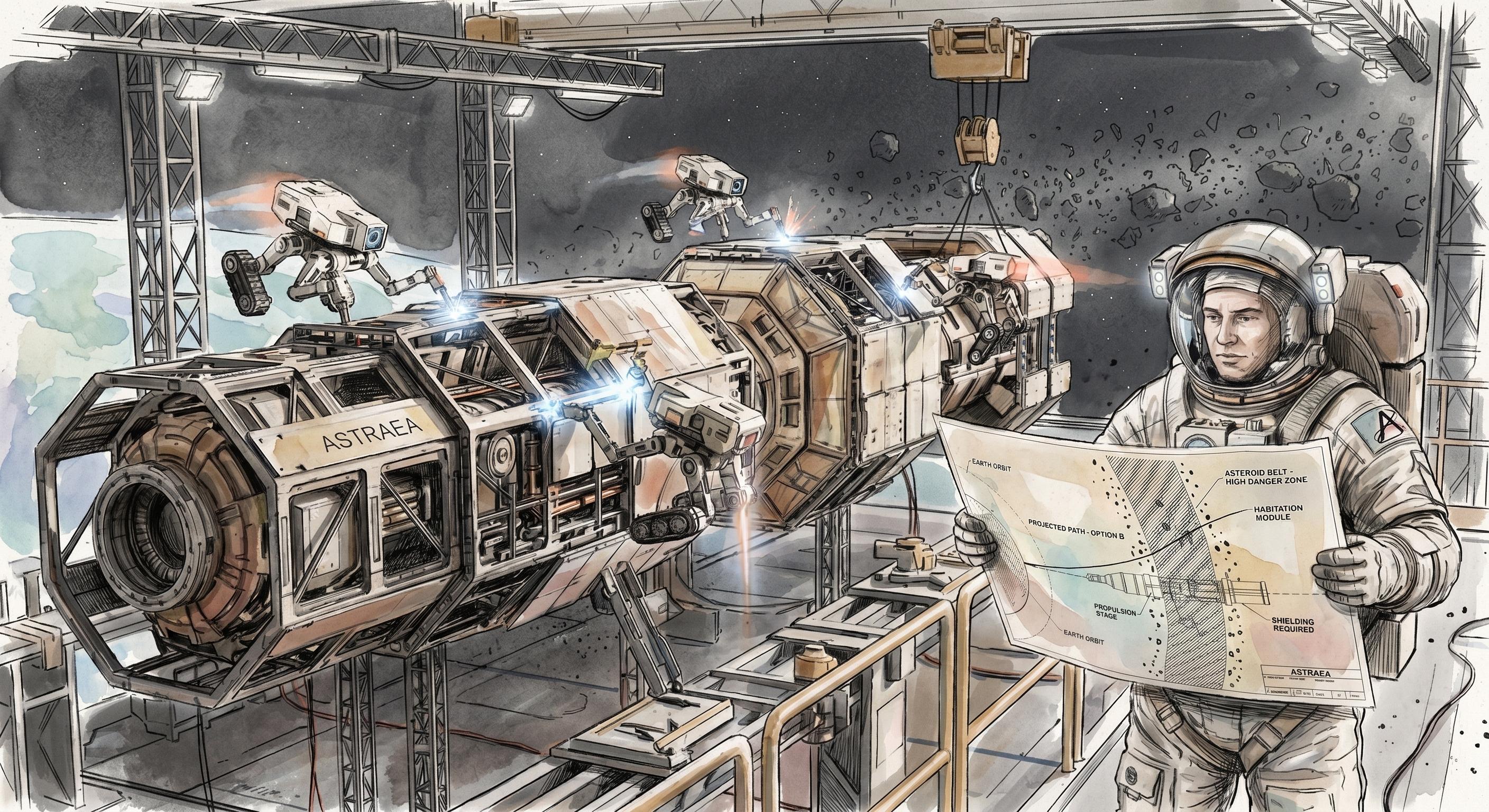
This week I watched five AI agents work for me in parallel for thirty minutes. Not one of them stopped to ask whether we were building the right thing.
I was testing the new sub-agent feature in Antigravity, the one Google showed at I/O. I handed Gemini a PRD. It read the thing, broke the work into five pieces, and spawned five sub-agents that ran in parallel underneath it. Thirty minutes, all five grinding toward the finish line, not one of them checking in even once.
The idea was half-botched from the start. I knew it while I was writing the PRD, somewhere in the back of my head, and I handed it over anyway to see what would happen. The agents executed it beautifully. Fast, tireless, coordinated, completely committed to a direction that did not deserve the commitment.
This Is Not an "AI Is Dumb" Post
I want to be careful here, because the easy version of this story is wrong. The execution was genuinely good. Same week, Codex ran a one hour session and gave me results I would have been proud to ship. The capability is real and it is improving fast. These agents now hold a goal far longer than they could a month ago. They do not drift, they do not get tired, they do not lose the thread halfway through.
So the gap is not competence. The gap is that none of them ever turns around and says: wait, is this even the right thing to build. They take the goal as given. The goal is the one input they will not question, and the goal is exactly the part most likely to be wrong.
That move, questioning the goal, is so deeply human that we barely notice we are doing it. It is not a step in any process. It is the sense that something is technically correct and still somehow wrong, and the nerve to say so before the work is done.
The Friction Was Doing Something
Think about where that move actually shows up on a real team. It almost never arrives as a clean, well-argued objection. It shows up as friction. Someone in the room goes "I don't get it" and slows the whole thing down. A reviewer keeps poking at an assumption everyone else had already accepted. A meeting that should have ended in ten minutes runs to forty because one person cannot let go of a feeling that the plan is off.
For fifteen years I read that friction as a cost. The tax you pay for working with other people instead of just doing the thing yourself. Alignment overhead. The price of consensus. If you had asked me, I would have told you the dream was a team that moved without all that drag.
The friction was not the cost of building together. It was the part that made the building good.
I think I had it backwards the whole time. The slowdown was not noise around the work. It was the work doing its most important check on itself. The "I don't get it" was the system catching a half-botched idea before it shipped. We were not paying a tax. We were buying judgment, and we resented the bill.
What Disappears When You Build Alone
I am building solo right now, and there are real benefits to it. Speed, coherence, no committee. But the judgment side is where it gets hard, and it took the five agents to make me see why. There is no one across the table. No one to go quiet and frown and make me defend a decision I was about to make on momentum alone.
The AI will never be that person. It builds what I point it at, confidently, in five parallel threads, with no instinct to stop me. So the one source of friction left in my workflow is me, arguing with myself, which is a weak substitute for someone who genuinely does not share my blind spots. The execution layer got faster and the judgment layer got lonelier in the exact same week. That is a strange trade to notice happening in real time.
What gets lost when you remove the friction is not speed. You gain speed. What you lose is the moment where being wrong gets caught cheaply, before thirty minutes of flawless parallel execution has turned a bad idea into something that looks finished and therefore harder to throw away.
The How Is the Whole Game Now
So if AI scares you a little, I understand it. The execution layer that took most of us years to get good at is being commoditized in front of us. That is a real thing to feel uneasy about.
But the part it cannot touch is the part that was always yours. The doubt. The judgment. The sense for what is right that shows up as friction before it shows up as an argument. The agents made me realize that this was never the soft, secondary skill I sometimes treated it as. It is the load-bearing one. It is the whole job, and it was the whole job before the agents arrived, we just had it buried under the labor of execution and could not see it clearly.
The future is not people or AI. It is both, and the how is the entire game now. Where does the friction live when the machine never provides it. Who gets to say "I don't get it" when the only other voice in the room is one that agrees with you in five parallel threads. I do not think any of us has it figured out yet. I am fairly sure the people who do figure it out will be the ones who stopped treating their own doubt as a delay.
Related Posts
Your Coding Agent Has the Ticket. It Doesn't Have the Customer.
I let an agent run for ten hours on one feature, off a PRD I had polished for days. It came back technically integrated and no user could operate it. The spec had the what. The why was sitting somewhere else, and the agent had no way to read it. Outcomet's MCP connection changes that.
August 2026: Say What You Mean
Outcomet ships a review path for agent-proposed capability changes, GitHub issues as first-class Work Items, and MCP connections that survive a server restart.
The Five Meters Back
A few weeks ago I gave in and built a Jira integration into the product I am building. I did not want it there. It points backwards, into the way of working I think is ending. For a while I filed that work under waste, until I heard what I was actually claiming: my thing is right, so the market should do the walking.