Outcomet and Jira Product Discovery: follow one decision
Jira Product Discovery connects customer insights to ideas and delivery in Jira. In Outcomet, follow the feedback and changes linked to a product area. Compare the work you need to do in each setup.
Start with what your Atlassian setup already does.
Customer insights, prioritization, roadmaps, and links to delivery may already cover your needs. Review your configuration before adding another tool.
In Outcomet, open a product area and follow the feedback and related changes. Use the same recent decision in both systems.
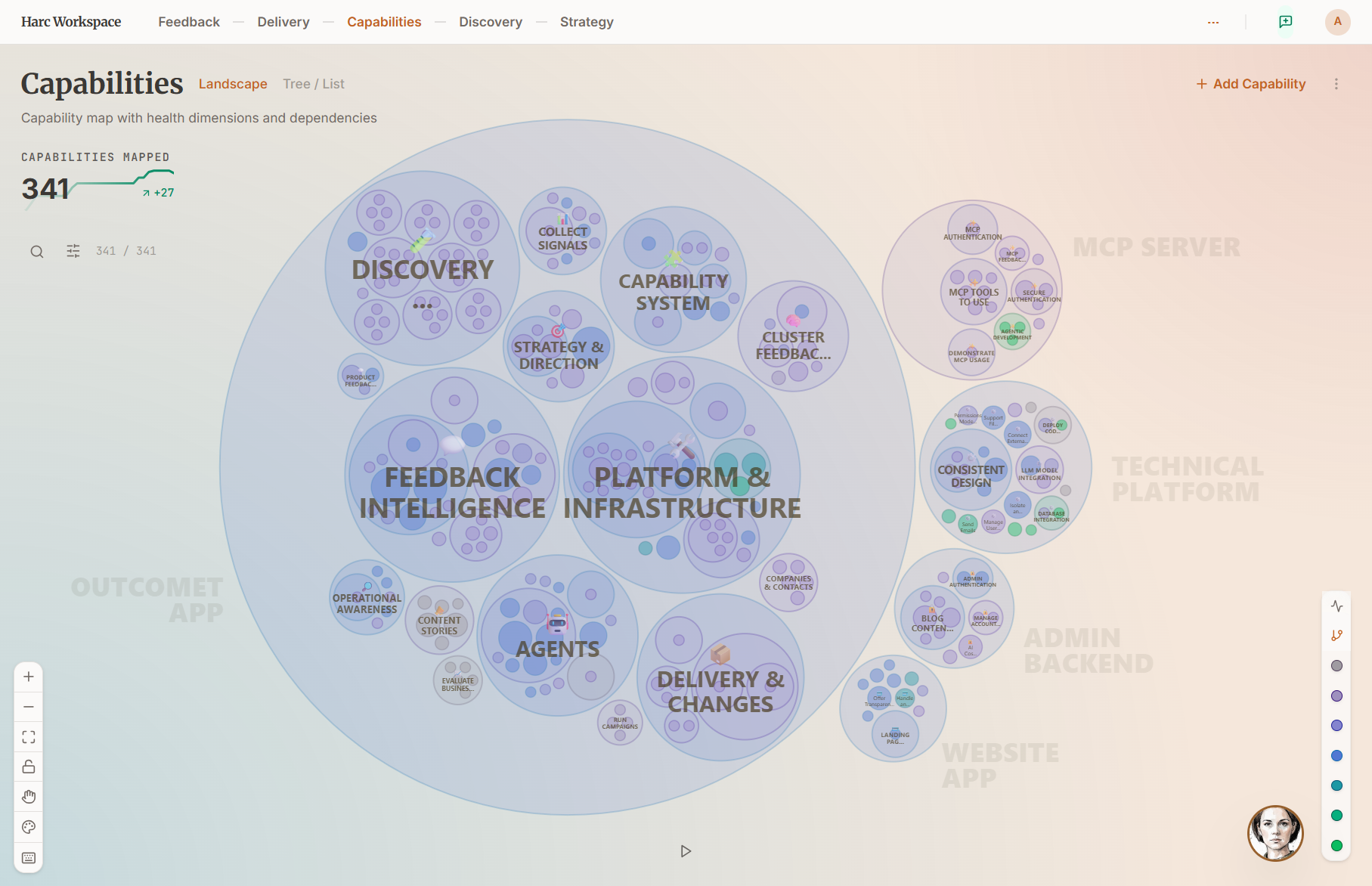
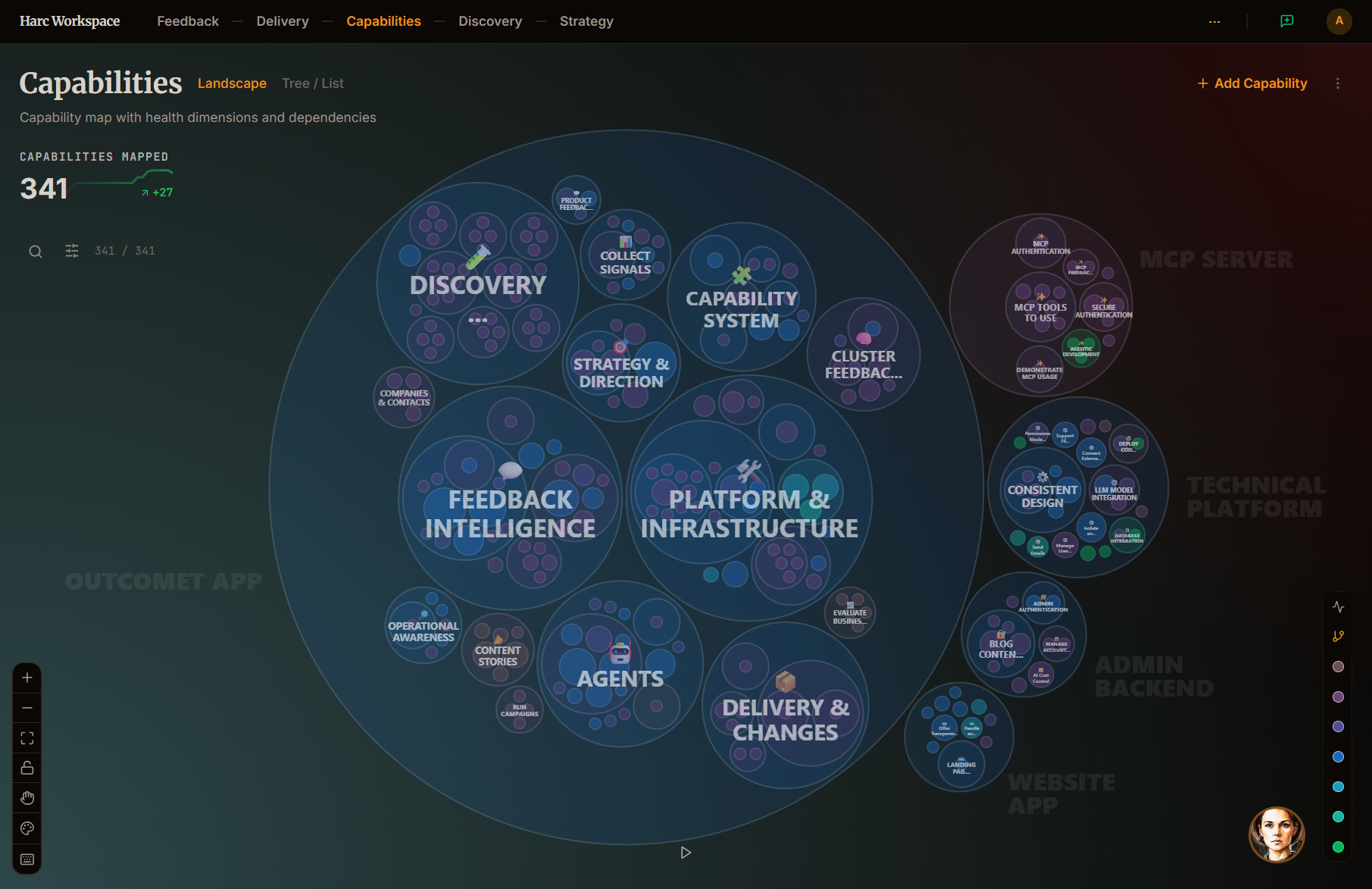
Open the capability map at full size in a new tab
Can we find the original customer problem and the work that followed?
Start with a product area. Review its linked feedback and changes to understand why the team acted.
Which ideas should we pursue — and how are they progressing?
Operates on configurable ideas and work items. Insights, scoring, tree views, roadmaps, and Jira delivery links help teams choose and coordinate change.
Compare the work you need to do
| Feature | Outcomet | Atlassian Suite (Jira, JPD) |
|---|---|---|
| Primary record | A product area with linked feedback and changes | A configurable idea in JPD or a work item in Jira |
| Structure | An overview of product areas and their relationships | Custom idea types and connection fields shown in lists, roadmaps, or a configurable tree view |
| Evidence attachment | Customer feedback and changes linked to the area they concern | Insights, research, votes, and criteria attach to ideas and inform prioritization |
| Delivery & code trace | Related changes provide context for what was implemented | JPD ideas link to Jira work items; Jira links GitHub activity through work-item keys |
| AI & automation | Nova helps group feedback and draft summaries for review | Rovo assists inside Jira and JPD workflows with drafting, summaries, search, and agents |
| Best choice when | You need to find the feedback and reasoning behind changes to a product area | The need is feedback intake, idea prioritization, roadmaps, and coordinated delivery |
| Pricing (vendor currencies) | See Outcomet pricing for current monthly plans and included usage | Check the current Jira and JPD plans for your seats and configuration |
When to use what
When to use Outcomet
Check whether opening a product area makes the evidence, reasoning, and related changes easier for your team to find and keep current.
When to use Jira & JPD
Customer insights, prioritization, roadmaps, and links to Jira delivery may already cover your needs. Check the features included in the plan and configuration you actually use.
Compare one real decision through both.
Find the original customer evidence, the reason for the choice, and the work that followed. Compare the effort to keep that record current.