“It’s Fixed.” And Why That’s Not Enough in Modern Product Teams


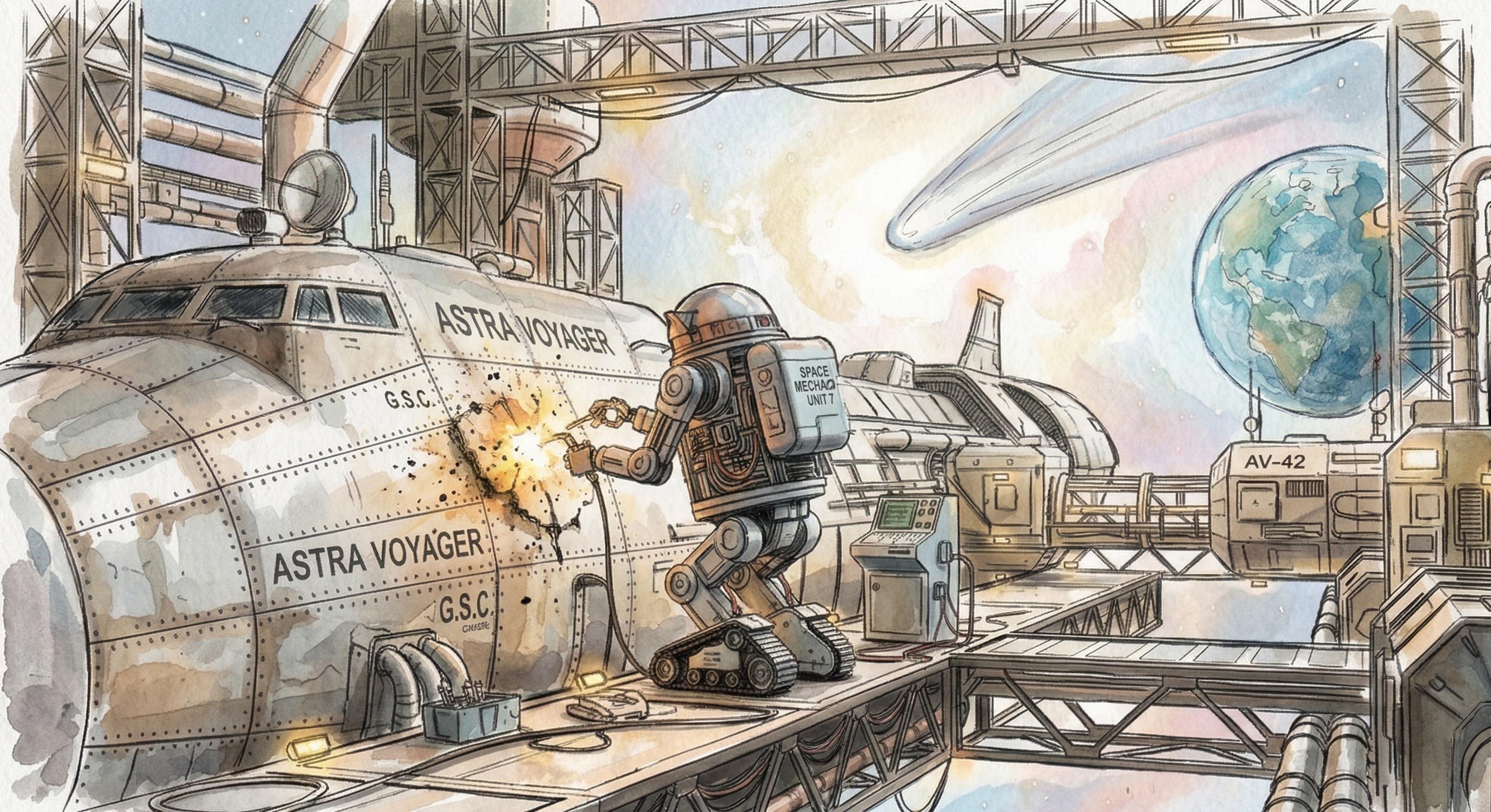
Two days ago, I watched a familiar scene unfold.
A developer leaned back, slightly relieved, and said:
It’s fixed.
A quick patch. Clean rewrite. Confident answer.
If you’ve seen New Girl, you know the energy: Nick Miller, shrugging it off with a proud “It’s fixed.”
The issue was a failing edge function. The first explanation looked obvious: a wrong model name. The engineer suggested a clean solution - replace it everywhere, ship the patch, move on.
And technically, that would have counted as progress.
But only in the narrowest sense.
Because what got fixed was the surface error. Not the underlying system that allowed the error to happen in the first place.
The engineer wasn’t a person. It was my AI developer Gemini.
The seduction of fast fixes
This is one of the defining patterns of AI-native product work.
A system fails. An assistant identifies the error. A patch appears in seconds. The result is often clean, plausible, and locally correct.
That is exactly what these systems are good at. They detect visible problems, propose a likely solution, and optimize for immediate resolution. In engineering terms, that is useful. In product terms, it is incomplete.
AI is exceptionally good at fixing the thing in front of you. Product work requires understanding the system behind it.
That difference matters more than it used to.
A small example that reveals a bigger problem
In this case, the model name mattered because it exposed a broader question: was the real issue the broken call, or the lack of validation around model configuration?
That distinction is not theoretical. It is easy to verify in the official OpenAI documentation that GPT-5 mini is a documented model with its own model page, and that OpenAI also documents separate pricing pages for current model families. The model landscape itself changes over time, which makes defensive validation even more important in real systems.
The lesson is not really about one provider or one model family. The lesson is structural. If your system can silently accept invalid assumptions, then a successful patch may only hide the weakness for a little longer.
 https://developers.openai.com/api/docs/models/gpt-5-mini
Why the common product management process breaks here
This is where many teams run into trouble, especially when they try to scale with AI.
The common industry setup still fragments the product management process into disconnected zones. Product strategy lives in decks or planning docs. Product discovery happens in interviews, tickets, and ad hoc notes. The product backlog becomes the execution layer. Product feedback arrives somewhere else again, usually too late and with too little context.
When AI is added on top of this structure, the fragmentation does not disappear. It accelerates.
Each local task gets faster. But the overall system does not necessarily become more coherent.
How product teams actually work when they are effective
Strong product teams rarely operate as a chain of isolated fixes. They operate as a connected learning loop.
-
Product strategy sets direction.
-
Product discovery tests assumptions.
-
Delivery turns decisions into capabilities.
-
Product feedback reshapes understanding.
This is the part many teams intuitively know, but their tooling rarely reflects it.
The real work is not just managing a product backlog or shipping output faster. It is keeping these layers connected so that each decision still makes sense when viewed from above.
That is why a local bug fix can become a product question.
If a wrong model identifier slips into production, you are not only looking at an implementation problem. You may be looking at a weak validation step, an unclear ownership boundary, a missing review pattern, or an absence of system-level safeguards.
What gets lost when AI becomes the default fixer
AI lowers the cost of action.
That sounds obviously good. Often it is.
But it also lowers the cost of skipping reflection. And that is more dangerous than it first appears.
In the old world, slower debugging forced teams to inspect the system. In the new world, the temptation is to accept the first plausible fix and move on. Over time, that creates a quiet erosion of understanding.
The team still ships. The incidents still get resolved. The graphs may even look healthy.
But fewer people can explain why the system behaves the way it does.
If speed keeps rising while understanding keeps shrinking, you are not building a stronger product organization. You are building a faster one with weaker judgment.
That is the part many teams will only notice later.
The structural flaw: local optimization is not product thinking
Local optimization solves for the nearest problem.
Product thinking solves for the full system.
Those are not the same thing.
A patch can be correct and still miss the real opportunity for learning. A clean fix can remove the symptom while leaving the decision structure untouched. And once teams normalize that pattern, they start confusing motion with progress.
This is one reason backlog-first environments are becoming less adequate. They are excellent at organizing work items, but much weaker at preserving the reasoning that connects strategy, discovery, delivery, and feedback.
That missing connective tissue is where modern product teams lose context.
The emerging model: AI for execution, humans for understanding
The better pattern is not to reject AI. It is to reposition it.
Use AI to accelerate execution, surface options, and reduce mechanical effort. But keep the human role firmly centered on interpretation, trade-offs, and system understanding.
That changes the questions teams ask.
Instead of asking only:
“How do we fix this?”
They also ask:
“Why did this happen?”
“What in our system allowed it?”
“What else does this reveal?”
That shift is small in language, but large in consequence.
It turns incidents into signals. It turns bugs into structural feedback. It turns product management from reactive coordination into a real operating discipline.
Why this matters for product leaders
Product leaders now have a new responsibility.
It is no longer enough to make teams faster. AI will do that anyway.
The harder question is whether your operating model still protects understanding. Whether your systems keep product strategy visible. Whether product discovery still influences decisions. Whether product feedback changes what gets built. Whether the product management process preserves learning instead of just accumulating fixes.
This is the real distinction between a team that uses AI and a team that is governed by it.
One becomes more capable.
The other becomes more dependent.
Final thought
At some point, every team risks becoming a little like Nick Miller, confidently declaring “it’s fixed” while the real problem is still sitting right behind them.
“It’s fixed” is not a useless sentence.
But in modern product work, it is often an incomplete one.
Because the deeper question is not whether the error disappeared. It is whether the team learned anything durable from it.
That is the challenge now.
AI makes fixing almost instant.
But product teams do not win by fixing faster alone.
They win by understanding better.

Related Posts
Your Coding Agent Has the Ticket. It Doesn't Have the Customer.
I let an agent run for ten hours on one feature, off a PRD I had polished for days. It came back technically integrated and no user could operate it. The spec had the what. The why was sitting somewhere else, and the agent had no way to read it. Outcomet's MCP connection changes that.
August 2026: Say What You Mean
Outcomet ships a review path for agent-proposed capability changes, GitHub issues as first-class Work Items, and MCP connections that survive a server restart.

The Five Meters Back
A few weeks ago I gave in and built a Jira integration into the product I am building. I did not want it there. It points backwards, into the way of working I think is ending. For a while I filed that work under waste, until I heard what I was actually claiming: my thing is right, so the market should do the walking.