The Five Meters Back


A few weeks ago I gave in and built a Jira integration into the product I am building.
I did not want it there. It points backwards, into the way of working I think is ending. The tracker is where work goes once the deciding is already finished, and the deciding is the whole thing I am interested in. Building a good road to the tracker felt like paving in the wrong direction.
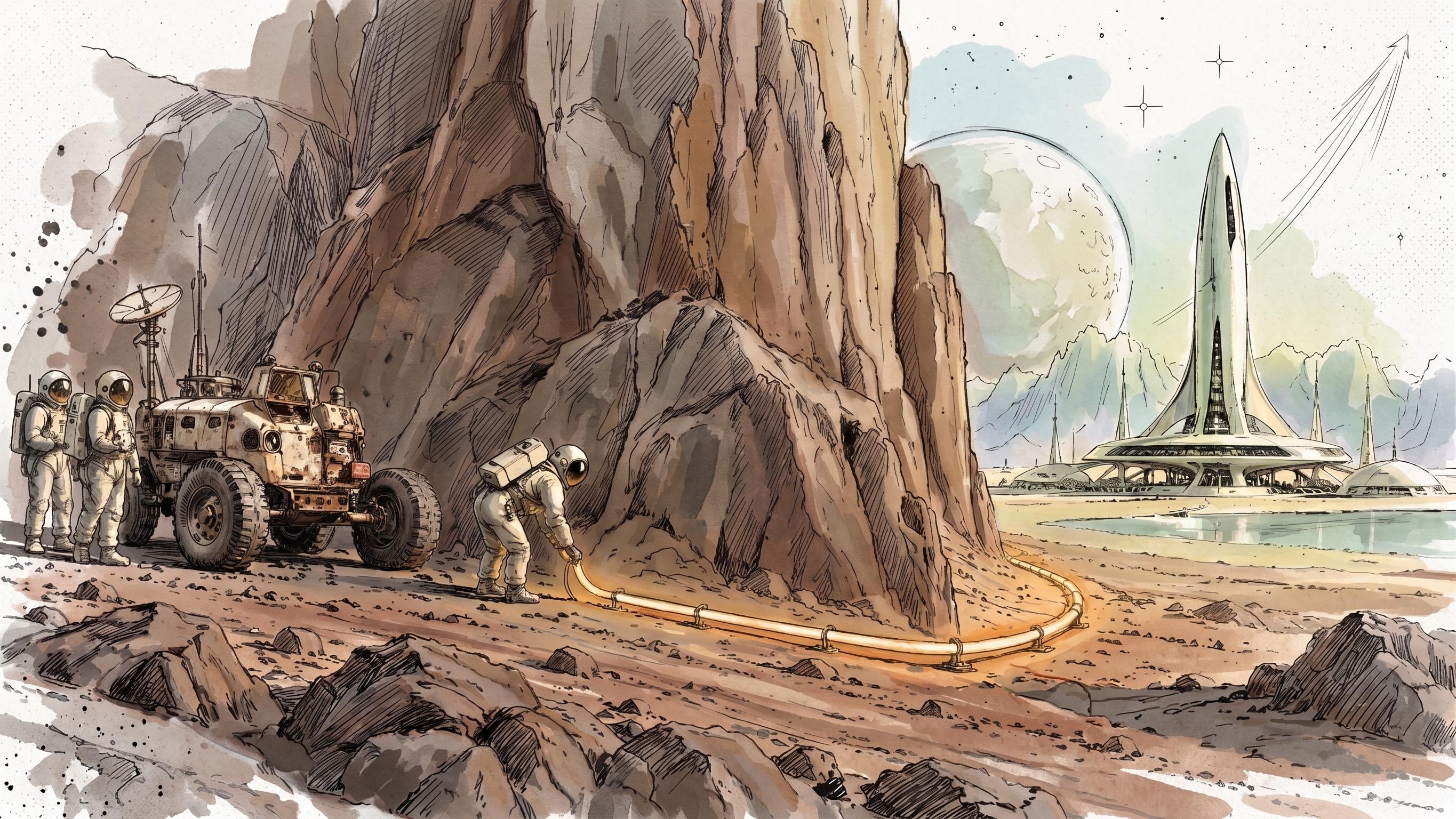
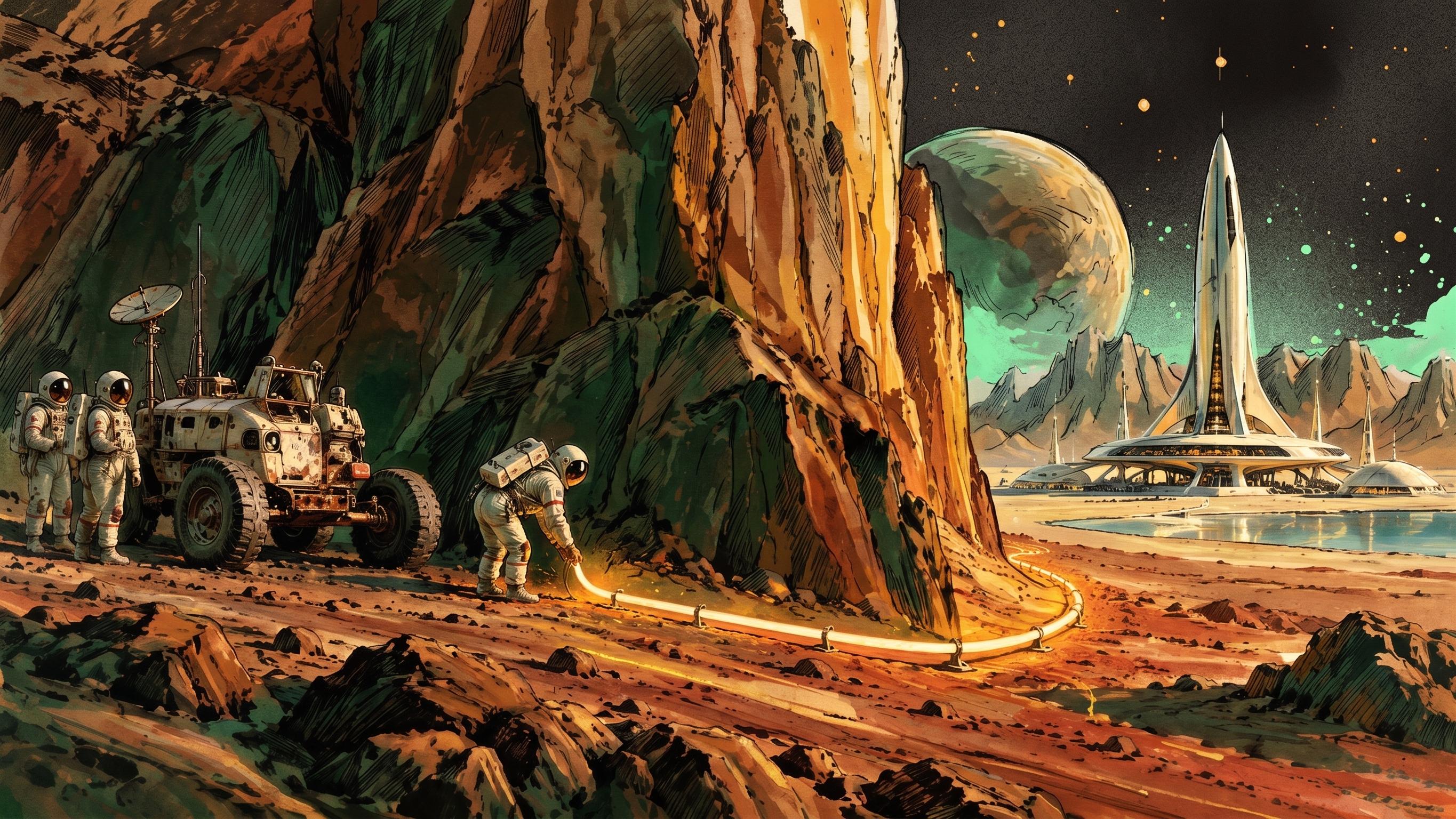
I tried to explain this to someone and it came out as a picture instead of an argument. I stand around the corner, and the people cannot see me, because they do not know how to walk the street to get there. So I have to go the five meters back to them.
Five meters that produce nothing new. They only bring people around the bend.
The Better Idea Does Not Walk Itself
There is a comfortable belief in product work that a genuinely better model announces itself. You solve a real problem in a way nobody solved it before, and the people with that problem find you, because the problem is what they were searching with.
They were not searching with the problem. They were searching with their stack.
Somebody who is tired of deciding what to build next does not type that sentence into anything. They think in the categories they already own. A feedback tool. A roadmap tool. A tracker. A place where the tickets live. Those categories came with names, budget lines, and a person who already administers them. When a new thing does not sit inside one of those names, there is no route to it, and the absence of a route looks exactly like the absence of a reason.
So a new category has a discovery problem long before it has a quality problem. That distinction took me longer to accept than I would like to admit, because the two feel identical from the inside. Nobody arriving is nobody arriving. It is very easy to read it as a verdict on the thing itself.
People Navigate From Where They Already Stand
Watch how product teams actually talk about their tooling and the pattern gets obvious.
In problem interviews the same shape keeps returning. Signal arrives from four or five places at once, out of sales calls, support queues, customer conversations, a stakeholder who catches you in a hallway. Somebody hand-sorts it. The sorting produces a view of what matters, and then the view has to travel back into the tracker where the work actually happens, and that last part is where it usually dies. One practitioner put it about as plainly as it can be put: the gap is not structure, it is connectors and attribution.
Nobody in those conversations asked for a replacement. Not one. What they described, over and over, was a bridge into what they already run.
I heard that as a compromise for a long time. It is closer to a description of how adoption physically works. You do not get to hand somebody a new map of a city they live in. You have to start at the corner they are standing on, which is the corner you left, which is the five meters.
The Cost of Being Right and Invisible
For a few weeks I filed the integration work under waste. Real hours, no new capability at the end of them, a feature whose only job is to bring somebody around a bend.
Then I heard what I was actually claiming underneath that. My thing is right, so the market should do the walking.
That is a very comfortable position. It explains every quiet week without requiring anything from me, and it has the pleasant shape of patience, and it is also a very good way to stay invisible with something that works. Whatever the market owes you, it does not owe you the walk.
Being right and being findable are two different problems. I had only ever worked on the first one.
The uncomfortable part is that the first problem is the fun one. Getting the model right is craft, it is the thing I am good at, and it rewards you the moment you finish it. The second problem is customer service for people who have not arrived yet. It pays nothing today and it does not feel like building.
A Bridge That Becomes the Product Is a Failed Bridge
The obvious objection to all of this is that meeting people where they are quietly turns into staying where they are. Every backwards-pointing feature is defensible on its own. Together they are a slow return to the world you were trying to leave, one reasonable ticket at a time.
The test I have landed on, and I am still testing the test, is directional. Does this piece of work carry somebody toward the new model, or does it let them keep working the old way with a nicer surface on top?
An integration that pulls the tracker's reality in so decisions can be made against it moves people forward. An integration that lets somebody keep making decisions in a meeting and then writing tickets, only faster, does not. Same connector, opposite direction. The difference is not visible in the feature list, which is why it needs a decision rather than a roadmap slot.
There is also a version of this argument I am not allowed to make anymore. For a while my instinct was to argue that people cannot build this themselves. Then a founder showed me the pipeline he had wired together in an afternoon, pulling call transcripts through an API and grouping the feedback, running in a real company making real money. Capable people can absolutely build it. What almost nobody has built is the part that survives the person who built it: something shared, durable, where a shipped change can still be traced back to the evidence that caused it six months later. For most teams that trail still lives in a meeting and somebody's memory.
So the bridge cannot argue capability. It has to argue what is still there when the person who set it up moves on.
How Far Back Is Too Far
I do not have a clean answer to the thing that actually bothers me.
Five meters and you meet people where they are. Fifty and you are just another tool in the world you were trying to leave, with a slightly better story about why. The distance is not the kind of number you can derive. You find out afterwards, by looking at what your product became while you were being reasonable.
What I know now is that the walk is not a detour from the work. Somebody has to make the trip, and it was never going to be the person who does not know you are around the corner.
Related Posts
Your Coding Agent Has the Ticket. It Doesn't Have the Customer.
I let an agent run for ten hours on one feature, off a PRD I had polished for days. It came back technically integrated and no user could operate it. The spec had the what. The why was sitting somewhere else, and the agent had no way to read it. Outcomet's MCP connection changes that.
August 2026: Say What You Mean
Outcomet ships a review path for agent-proposed capability changes, GitHub issues as first-class Work Items, and MCP connections that survive a server restart.
Nobody Asked Me to Write That Down
I used to take my backend developers into customer interviews. The understanding lived in the room, and we never wrote it down. It worked beautifully, and it left almost no trace. Product teams document their output obsessively and their reasoning almost never, which is why a strategy can walk out the door with one person.